Dominoes
Match the pips and be the first to play all your tiles
About This Game
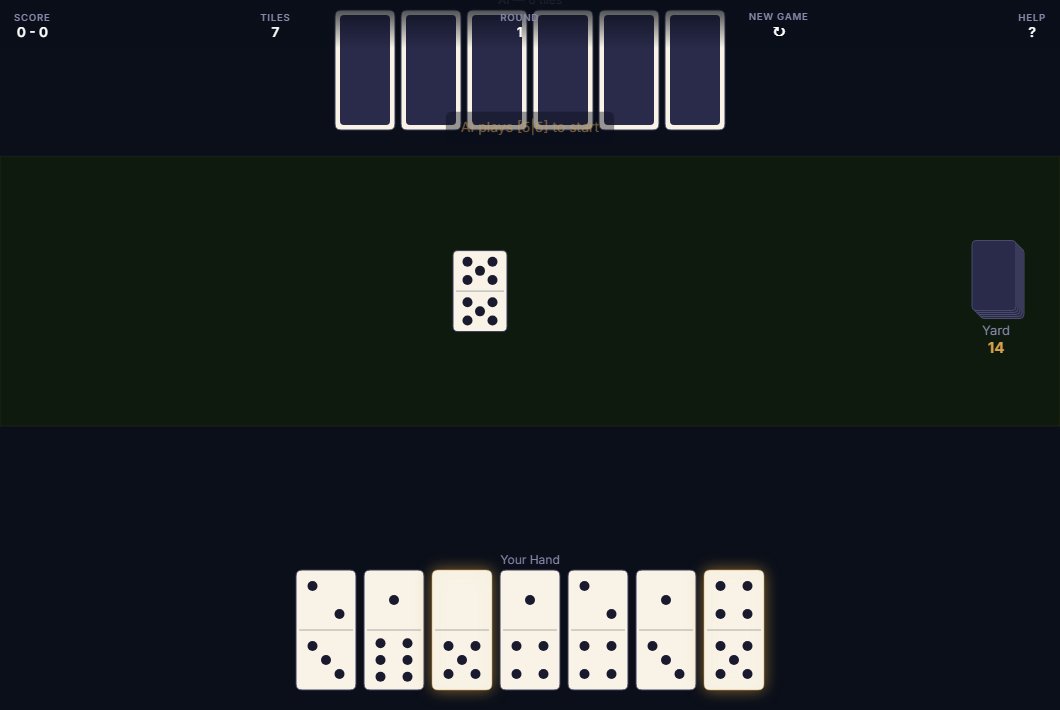
Dominoes is a matching tile game against an AI. The first player to 100 points wins the match. Each round starts with a double-six set of 28 tiles. Each player gets seven tiles, and the rest form the boneyard. The highest double in any hand goes first. If nobody has a double, the highest-pip tile starts. Tiles extend the chain from both open ends. A tile can only go where one of its pip values matches the open end it connects to.
If you can't play, you draw from the boneyard until you find a tile that fits or the boneyard runs out. If both players get stuck and neither can play, the player with the lower pip total in hand wins that round and scores the difference. Round winnings equal the total pips left in the opponent's hand. So clearing low-value tiles early is smart even when they don't help your position.
The AI uses a strategy that looks at pip count and how common each value is in its hand. It prefers to play doubles early. Doubles can only be played on one pip value, so holding them too long risks getting stuck. The match usually takes six to twelve rounds.
Screenshot
History & Background
The exact origin of dominoes is disputed, but the game is well-documented in China by the 13th century. The tiles represented all combinations of two six-sided dice and were used in various games. European dominoes show up in 18th-century Italy and France. Most historians think the game came through trade routes from China, though some argue it was invented separately. The word domino may come from a black-and-white clerical hood called a domino, which the tile pattern was said to look like.
European dominoes settled on the double-six set — 28 tiles covering all combinations from 0-0 to 6-6. That's still the most common set worldwide. The game spread widely in the 19th century as a parlor game. Dozens of versions developed: blocking games, drawing games, scoring games like All Fives, and partnership versions. In the Caribbean and Latin America, dominoes became deeply rooted in everyday culture.
This version plays the standard draw game. Match ends extend the chain. You draw when you're stuck. Win a round by having the lower pip total when the game blocks, or by playing all your tiles first. The AI picks tiles based on pip frequency — preferring plays that clear common values from its hand.
How to Play
- Each player draws 7 tiles from the boneyard (the rest form the draw pile)
- The player with the highest double plays first
- On your turn, play a tile that matches one open end of the chain
- If you can't play, draw tiles from the boneyard until you can (or it's empty)
- The first player to play all their tiles wins the round
- Score points equal to the total pips left in opponents' hands
Tips & Strategy
Features
Controls
Click a tile, then click the end of the chain to place it.
Tap tile to select, tap board end to play.