FreeCell
Every card face-up, every game solvable — the thinking player's solitaire
About This Game
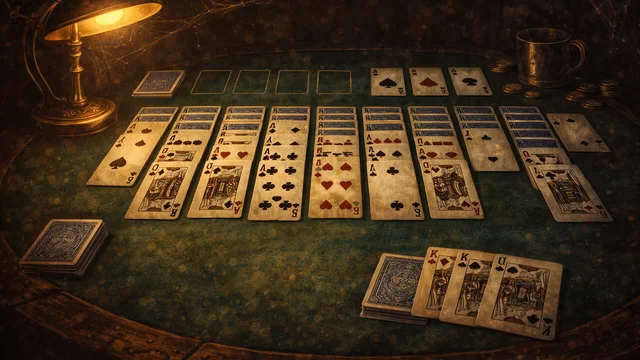
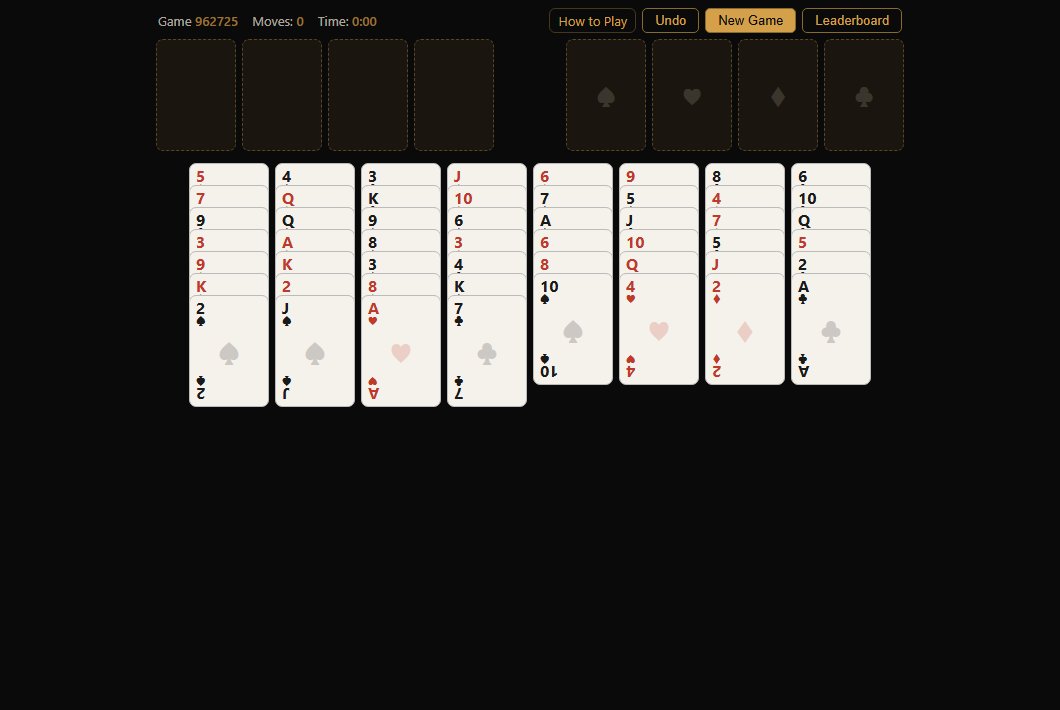
FreeCell is the solitaire game where skill beats luck. All 52 cards are dealt face-up into eight tableau columns, so you can see the whole board from the start. Four free cells in the corner hold cards temporarily while you rearrange. The goal is to build four foundation piles from Ace to King by suit.
Almost every FreeCell deal is solvable — roughly 99.999% of them. But finding the path takes real thinking. Free cells are your most precious tool. Use them well and you can untangle almost anything. Waste them and you'll get locked out fast.
Screenshot
History & Background
FreeCell was invented in 1978 by Paul Alfille, a medical student at the University of Illinois. He coded it on the PLATO mainframe system. His key idea was simple but powerful: deal every card face-up. With nothing hidden, each game becomes a pure logic puzzle.
Microsoft put FreeCell in Windows for Workgroups 3.1 in 1992. Of the 32,768 numbered Microsoft deals, 32,000 are solvable. Deal #11982 is the most famous exception. Between 1994 and 1995, a community effort solved or proved unsolvable every single numbered deal.
How to Play
- All 52 cards are dealt face-up — no hidden information
- Build four foundation piles by suit from Ace to King
- Stack cards on the tableau in descending order, alternating colors
- Use the four free cells as temporary storage for individual cards
- Move groups of cards if you have enough free cells and empty columns
- Win by moving all cards to the foundations
Tips & Strategy
Tips for the Real-World Game
Features
Controls
Click and drag cards between columns, free cells, and foundations.
Tap to select, tap destination to place.