Forge Maze
Navigate a new labyrinth every day — harder as the week goes on
About This Game
Forge Maze generates a new labyrinth every day, and it gets bigger as the week goes on. Monday's maze is 13×13 — a quick, fun warmup. Sunday's maze grows to 27×27, big enough to challenge experienced solvers. The size follows a seven-step pattern tied to the day of the week: 13, 15, 17, 19, 21, 23, and 27. You always know roughly what to expect before you start.
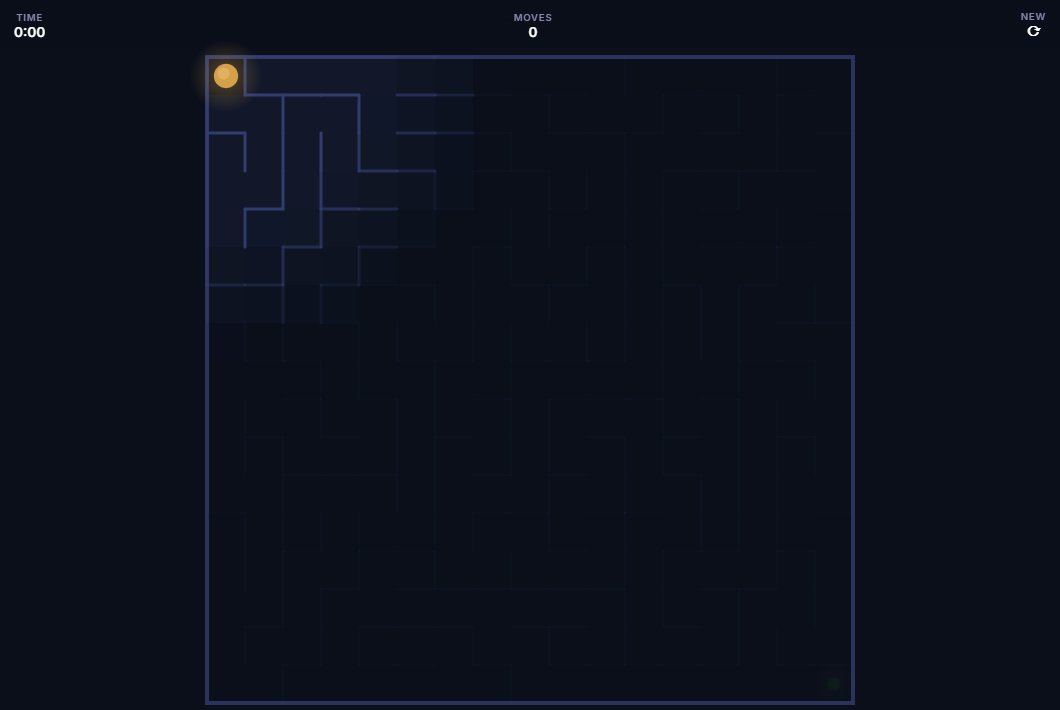
Every maze is a perfect maze — no loops, exactly one path from start to finish. You go from the entrance at the top-left to the exit at the bottom-right. A fog of war hides most of the maze. Only the cells near you are visible. The fog clears as you move, so the maze feels like real exploration rather than a puzzle you can just stare at and solve. A timer starts on your first move and stops when you exit.
The game tracks how many days in a row you've completed a maze. If you close the tab mid-maze, your progress is saved. Come back later and you pick up right where you left off.
Screenshot
History & Background
Mazes and labyrinths are some of the oldest puzzles humans have made. The Cretan labyrinth appears in ancient Greek myths. Labyrinth patterns were carved into the floors of medieval European cathedrals. Hedge maze gardens became fashionable in European estates from the 1500s onward. Hampton Court Palace's hedge maze, planted around 1690, is one of the most famous still standing today.
As a puzzle form, mazes became part of recreational math through 19th-century British puzzlist Henry Dudeney and later Martin Gardner, who covered maze types in his Scientific American column. Computer-generated mazes became a common programming exercise in the 1970s. Algorithms like recursive backtracking — the method Forge Maze uses — produce perfect mazes efficiently from any grid size.
Forge Maze seeds its generator with the calendar date, so every player on a given day gets the exact same maze. The fog of war is a modern touch that turns a visual puzzle into an exploration experience.
How to Play
- Navigate from the entrance (top-left) to the exit (bottom-right)
- Use arrow keys or WASD to move through the maze
- The maze has exactly one solution path — no loops or shortcuts
- Complete the maze as quickly as possible for a better time
- A new maze is generated every day with increasing weekly difficulty
- Toggle fog-of-war mode for an extra challenge
Tips & Strategy
Features
Controls
Arrow keys or WASD to move.
Swipe or on-screen directional buttons.