Hex Drop
Classic falling-block puzzle with EchoForge rune style
About This Game
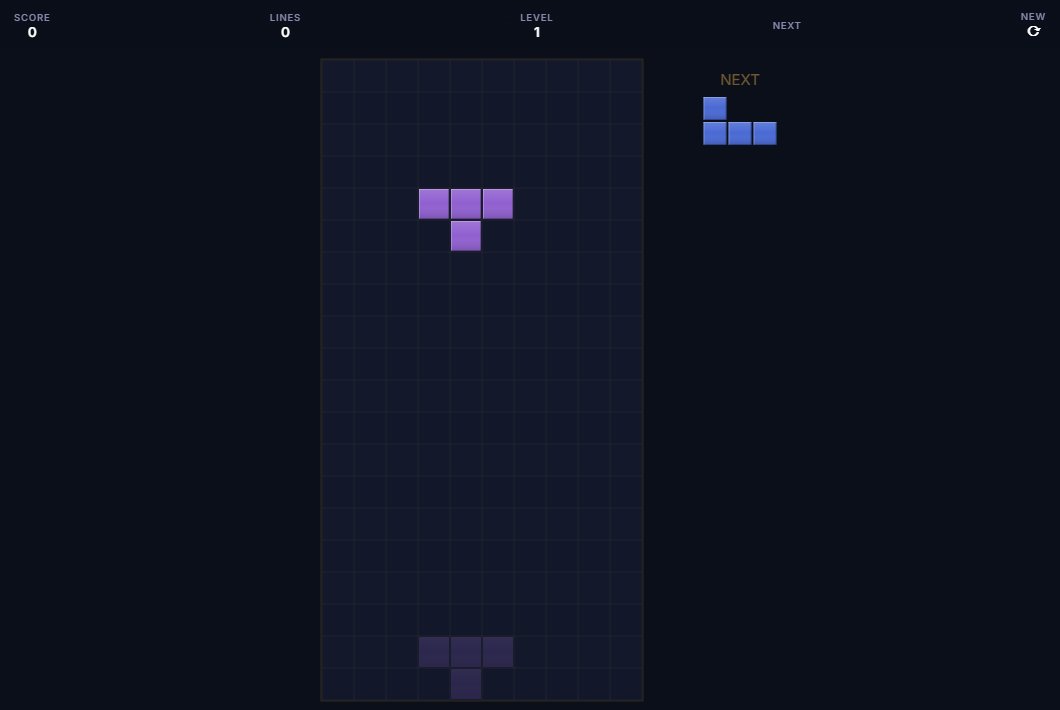
Hex Drop is a falling-block puzzle game on a standard 10x20 grid themed around ancient rune fragments. The seven classic piece shapes fall one at a time. Rotate and position each piece to complete full horizontal lines. Completed lines clear from the board and score points. Single-line clears earn 100 points times the current level. Doubles pay 300, triples 500, and clearing four lines at once earns 800, all multiplied by level. Soft-dropping a piece adds 1 point per row. Hard-dropping adds 2.
Speed starts at an 800ms drop interval and drops by 50ms with each level. Level goes up every 10 lines cleared. By Level 10, pieces fall every 100ms. By Level 17, the interval hits 50ms. The game uses a 7-bag randomizer, which means all seven shapes appear before any repeat. A ghost piece at 20% opacity shows the landing spot at all times.
Piece locking uses a 500ms delay that resets on any move or rotation. That gives you a brief window to slide a piece into position after it hits the stack. The rotation system uses SRS-style wall kicks with five offset tests per rotation. Most pieces can spin out of tight gaps instead of stopping against a wall.
Screenshot
History & Background
The falling-block puzzle format was created by Alexey Pajitnov at the Soviet Academy of Sciences in 1984. Tetris shipped on the original Game Boy at Nintendo's 1989 launch. It locked in the genre as a handheld staple. The core mechanic of seven pieces, rotation, and line clearing has changed very little over four decades.
What has changed is the systems around it. Modern tournament Tetris standardized the Super Rotation System (wall kicks) and the 7-bag randomizer in the early 2000s through the Tetris Guideline from The Tetris Company. Both changes reduced luck and made high-level play more consistent. Hex Drop uses both systems. That means skills from competitive Tetris, like board management and piece planning, transfer directly. The rune fragment theme is purely visual. The puzzle underneath matches the modern guideline spec.
How to Play
- Rune fragments fall from the top of the well
- Move pieces left and right with arrow keys or A/D
- Rotate pieces with the up arrow or W
- Drop pieces faster with the down arrow or S
- Complete full horizontal lines to clear them and score
- The game ends when pieces stack to the top
Tips & Strategy
Features
Controls
Arrow keys or WASD to move and rotate. Space for hard drop.
Swipe left/right to move, swipe up to rotate, swipe down to drop.